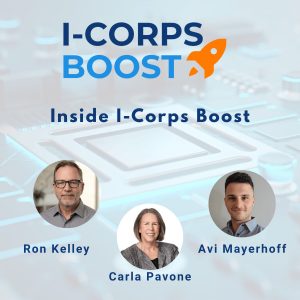
Many teams who have completed the regional I-Corps program have taken the next step by enrolling in the I-Corps Boost program. The I-Corps Boost program is open to teams who have previously completed the regional I-Corps program and are looking to delve deeper into customer discovery, accelerate commercialization, and increase their readiness for funding opportunities. We chatted with Carla Pavone, Avi Mayerhoff, and Ron Kelley: 3 of the original instructors of the Great Lakes Region I-Corps Boost program. They shared some personal insights on their experience with the program, teams they have mentored, and their own careers within entrepreneurship and innovation.
What is your favorite aspect of the I-Corps Boost program curriculum or teaching within the program?
Carla: It is exciting to watch amazing researchers learn how to embed their innovations into the context of an overall business model. By the end of a cohort, they have picked up the vocabulary and frameworks that translate an invention into a product. Through customer discovery and application of those frameworks, there are lots of “aha moments” along the way. The teams’ final pitches are amazing.
Avi: My favorite part about teaching in Boost is having a front row seat to watch the cohort grow in this particular stage of their development. The progress of each team is remarkable. It’s so rewarding to see the pieces come together for them as they get ready for follow-on funding.
Ron: Without question, office hours. Working one-on-one with teams is the most rewarding part of Boost for me. I enjoy helping entrepreneurs develop curiosity and critical thinking. I tell teams not to spend interviews trying to prove their business idea is right. Instead, try to understand the customer’s jobs—the things they are trying to get done—and what is preventing them from getting those things done.
When teaching an I-Corps Boost, what do you look forward to for the next cohort?
Carla: Working with STEM researchers seeking to commercialize their technologies is like being on an unending field trip! With each new cohort, I am heartened by the potential for these innovations to change the world for the better.
Avi: The “aha!” moments. Although every team’s journey is different, it is remarkable to watch the process click for each team. The interaction between the teams that helps them get there is quite special.
Ron: Every cohort is different, and that is what makes teaching Boost enjoyable. I especially look forward to the surprises—when teams uncover a counterintuitive insight that changes how they think about their customer, value proposition, or business model. Those moments remind us that entrepreneurship is a learning process, not a selling process.
What are some of the challenges that you see early entrepreneurs face?
Carla: Many early-stage STEM entrepreneurs fixate on finding money before they have figured out if they actually have a market. It’s much easier to attract investment and/or commercialization grant funding if you can show that potential customers recognize the problems a technology can solve and are willing to pay for that solution. That’s the power of the customer discovery and the I-Corps (aka Lean Startup) approach.
Avi: Conviction during their pursuit of customer-driven validation. When early entrepreneurs hear something they don’t want to hear from a customer, it can often feel like rejection or defeat. Instead, we encourage folks to approach with curiosity and treat constructive feedback as an opportunity. Once they get past that hurdle, it’s powerful to watch early teams shift their belief from their unfounded ideas and into themselves.
Ron: The biggest challenge is falling in love with the solution before fully understanding the customer. I encourage teams to treat customer discovery like hypothesis testing. Develop QRST hypotheses—Quantifiable, Relevant, Specific, and Testable—and then try to disprove them. If a cherished hypothesis fails early, that is success because it prevents years of pursuing the wrong opportunity.
Carla – Tell us more about your advisory work and history with women in entrepreneurship. How does this shape your approach to entrepreneurial education?
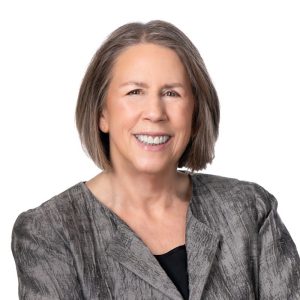
Way back when, Harvard Business School congratulated my incoming class because we included a record number of women—20%! I was in the female minority throughout my graduate education and the first half of my career. As I became more successful, I was inspired to help the women coming after me by serving on the board of a nonprofit for women entrepreneurs and by encouraging my female employees and students to pursue high-profile leadership roles. I’m proud to say that several have gone on to become corporate senior leaders and startup CEOs. My main message is that everyone with talent and drive has a right to a seat at the table, no matter their gender, race, or ethnicity.
Avi – How do you integrate your interest in sustainability and social impact into the mentorship of teams within the Boost program? Is there a team that comes to mind when chatting about sustainability and social impact within I-Corps?
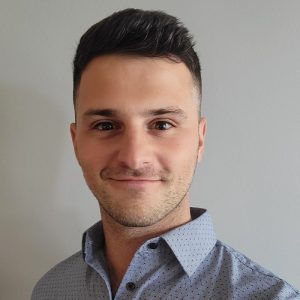 I double down on the methodology. It’s tempting to move forward just because a mission or potential impact is so compelling, but when we feel that pull, it’s important to remember intention does not equal impact. Customer discovery is crucial to really understanding the problem and how we might help address it. I encourage teams to take advantage of how I-Corps can help remove bias from the process and help teams understand their customer ecosystem. Especially when beneficiaries might differ from economic buyers and end users, I-Corps equips teams with a useful set of tools to navigate.
- CRIO Systems is a team on track to do wonderful things in water management.
- NeriNext is leading the way in unlocking menstrual fluid as a clinically viable biospecimen.
- Dr. Rahel Nardos and team are doing impactful work in global women’s health through the advancement of surgical tools for pelvic floor prolapses in low-income countries.
Ron – How have you personally used new developments in AI in your work in both entrepreneurship and leadership? How is AI being utilized in the Boost curriculum?
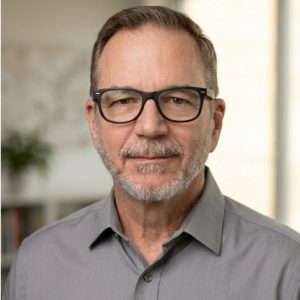 I use AI to support research, curriculum development, communication, and analysis of customer discovery data. In Boost, I encourage teams to use AI to analyze interview evidence: customer quotes, QRST data, recurring themes, and patterns across interviews. AI can help teams better define their beachhead customer, but it does not create the evidence. The evidence still comes from disciplined interviews and genuine curiosity about the customer.
If you are interested in the I-Corps Boost program and what it has to offer, check out our website for more information: https://greatlakesicorps.org/programs/boost/
Multiple cohorts run throughout the year, so make sure to keep an eye on application deadlines for each cycle. If you have any further questions, contact Avi Mayerhoff: [email protected]
Instructor Bios:
Carla Pavone, PhD, MBA, is a principal of Isles Growth Initiative, consulting on STEM entrepreneurship. She is an NSF I-Corps Teams national instructor and lead instructor of the NSF I-Corps Great Lakes Region hub. She is also the innovation and commercialization lead for the ATP-Bio NSF ERC. She was previously the Associate Director of the Holmes Center for Entrepreneurship, instructor of Strategic Management and Entrepreneurship at the Carlson School of Management, and Program Director of MIN-Corps. Prior to her academic career, Dr. Pavone worked in publishing and software startups, then led internal startups and turnarounds at an American Express subsidiary.
Avi Mayerhoff is the Director of Innovation and Industry Partnerships at University of Chicago Illinois. He currently leads UIC’s I-Corps program, teaches in the UIC program and Boost, and is the Tech Scout for UIC. He is a 2023 alum of the Baumhart Scholar Program in Loyola University Chicago’s Quinlan School of Business MBA program and has a strong background in social impact, innovation, ESG strategy, and partnerships.
Dr. Ronald J. Kelley is a Lead Instructor for the NSF I-Corps Great Lakes Hub BOOST program and Lead Instructor for the University of Wisconsin–Madison NSF I-Corps program. He is a physicist, entrepreneur, inventor, and innovation educator with more than 25 years of experience in technology commercialization, startup development, and evidence-based entrepreneurship. Before joining I-Corps, he spent 15 years at Motorola, where he was named inventor on 31 issued U.S. patents. He is also the author or co-author of approximately 50 peer-reviewed scientific publications.
NSF I-Corps Hub: Great Lakes Region, 2026
Article by Melena Barth


